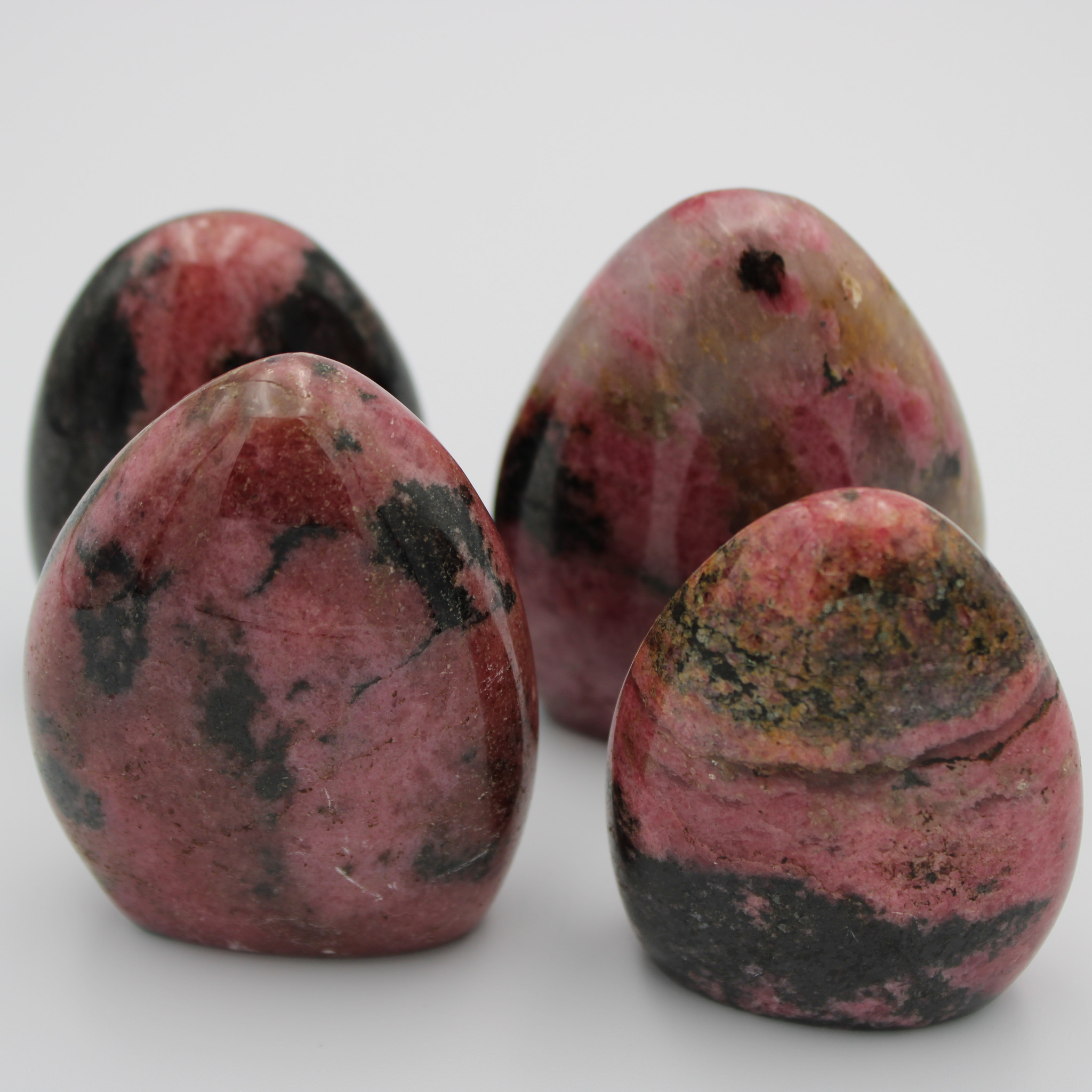
Rhodonite is one of those special gemstones that you not only see, but feel. With its pink to deep pink base color and dark, almost random-looking veins, it is one of those stones that immediately appeals to the heart. But its true effect goes far beyond pure beauty. Rhodonite is a companion for people who long for emotional healing, strength, and stability.
A stone for the heart and healing
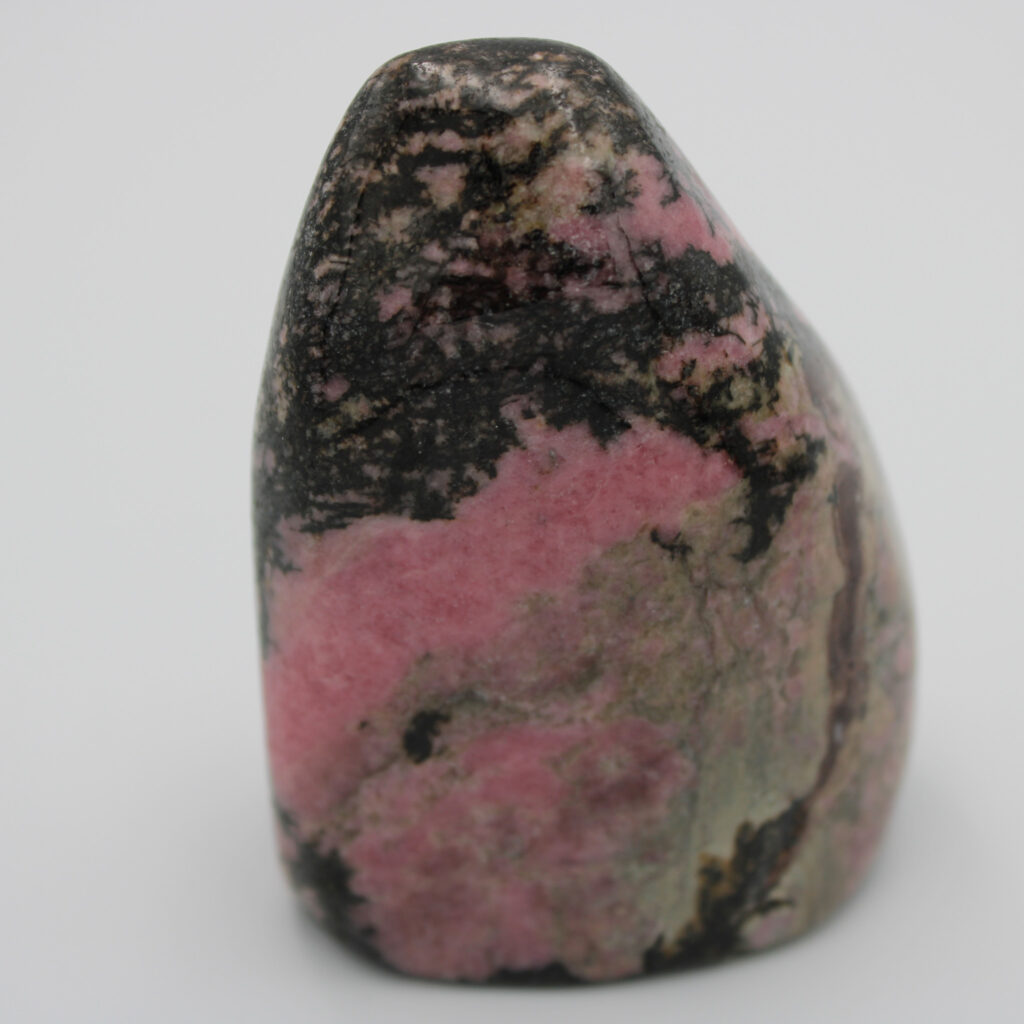
For centuries, rhodonite has been regarded as a stone of reconciliation, compassion, and emotional stability. Its energy has a calming, clarifying, and harmonizing effect on the heart center.
Many people turn to rhodonite when old wounds resurface or disharmony arises in relationships. It helps them to view situations with calmness and clarity and to remain more compassionate without losing themselves.
Rhodonite reminds us that healing is not a race, but a journey back to our center. It gently opens doors that have been closed for a long time and helps us to integrate wounded parts of our inner selves.
For times of change
The dark gray to black veins in the stone symbolize the challenges of life that intertwine with one’s own soul. Rhodonite is the perfect companion for times of upheaval, growth, or emotional overload. It has a balancing effect and provides support when we long for stability.
Many use it to develop more courage, set boundaries, or break old patterns of behavior. Its energy is clear, structured, and very grounding, without losing the lightness of the heart area.
Strengthening relationships and resolving conflicts
Rhodonite is also known as the stone of friendship and forgiveness. It helps us to clear up misunderstandings, express our thoughts, and reconnect with others. It promotes patience and empathetic communication, especially in relationships.
When emotions run high, rhodonite acts as an anchor. It brings us back to the moment and reminds us that we can act out of love rather than hurt.
How you can use rhodonite in everyday life
• As a tumbled stone for daily companionship in your pocket or at work
• As a pendant worn close to the heart
• In the bedroom for greater emotional peace and connection
• During meditation for opening the heart and inner healing
• In rituals for forgiveness, letting go, or new beginnings
Rhodonite works particularly well in combination with rhodochrosite (heart opening), rose quartz (gentleness), or black tourmaline (protection and grounding).
Affirmation for your rhodonite practice
I let go of what has hurt me. I open my heart to healing, peace, and new harmony.
A stone that accompanies rather than overwhelms
Rhodonite is a loving but clear teacher. It encourages us to look closely, but never in a harsh way. It supports, strengthens, and brings us back to our own emotional power. For all those who want to work on their inner balance or heal relationship issues, rhodonite is a valuable and faithful companion.
Formation, composition, and origin of rhodonite
Mineralogically, rhodonite belongs to the inosilicate group and is a manganese-containing silicate with the chemical formula MnSiO₃. Its characteristic pink to reddish-brown color is due to its high manganese content, while the dark, net-like veins are caused by inclusions of manganese oxides. These contrasting structures not only make rhodonite aesthetically unique, but also provide clues to its formation process.
Rhodonite usually forms under metamorphic conditions. It is created when manganese-rich rocks are transformed by pressure and temperature. This causes the crystal structures to rearrange themselves, forming the typical leafy or massive rhodonite structure. In rarer cases, rhodonite is also created by hydrothermal processes, in which hot, mineral-rich solutions circulate through rock layers.
The most significant deposits are located in Russia, Australia, Canada, Peru, and the USA. The intense pink rhodonites from Russia and Madagascar are particularly prized and are often used in jewelry. In Germany, rhodonite is mainly found in the Harz Mountains and in the Bavarian Spessart region, but usually in smaller quantities.
With a hardness of approximately 5.5 to 6 on the Mohs scale, rhodonite is easy to cut and polish, making it a popular material for pendants, cabochons, tumbled stones, and handcrafted objects. Its distinctive combination of color and grain makes each stone unique.